 Important Documents For Admission (2025 - 2026)





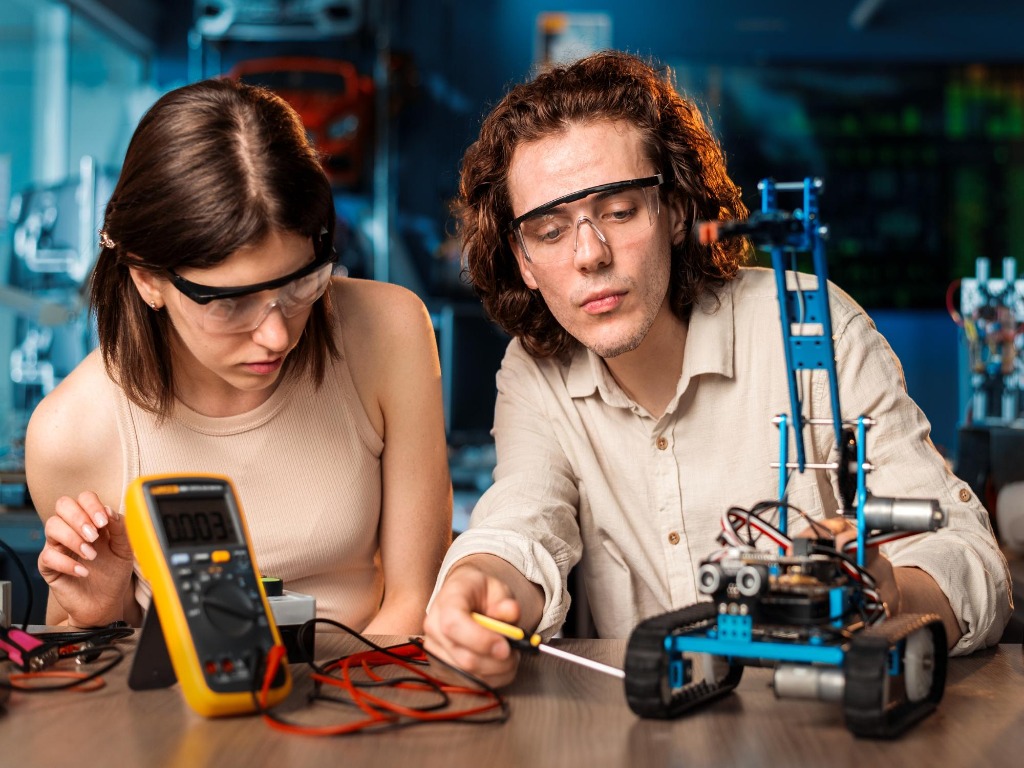
In today’s rapidly evolving technological landscape, engineering education must go beyond traditional lectures and examinations. At Indore Institute of Science and Technology, the Top engineering colleges in Madhya Pradesh where employers are no longer looking only for degree holders; they seek innovative thinkers who can solve real-world problems, adapt to change, and contribute creatively from day one. This shift has made practical engineering education the cornerstone of developing innovation-driven mindsets among future engineers.
Indore Institute of Science and Technology fosters an innovation-centric learning environment that builds problem-solving mindsets among engineering learners. Emphasising project-based education, students engage in research activities, interdisciplinary workshops, and real industry collaborations that enhance technical insight. The vibrant campus culture promotes innovation through tech clubs, hackathons, and entrepreneurial meets that encourage idea exchange.
Engineering roles today demand much more than technical accuracy. Professionals are expected to design efficient systems, optimise processes, and innovate solutions that meet global standards. Innovation-driven thinking allows engineers to approach challenges with curiosity, flexibility, and strategic insight.
Practical education nurtures this mindset by encouraging students to:
This approach transforms students from passive learners into active problem solvers.
One of the strongest drivers of innovation is hands-on learning. When students actively engage in projects, experiments, and simulations, they gain deeper conceptual clarity and confidence.
Practical engineering education includes:
By applying theoretical concepts in controlled environments, students learn how ideas evolve into functional solutions—an essential skill in any engineering career.
Project-based learning plays a vital role in shaping innovative engineers. Working on real-world problems helps students understand industry expectations and technical constraints.
Through structured projects, students develop:
Institutions aligned with the Engineering Institutions encourage multidisciplinary projects, allowing students to explore creativity while maintaining technical precision.
Innovation flourishes when students understand real industry challenges. Practical engineering education integrates industry exposure through internships, industrial visits, and expert interactions.
These experiences help students:
Early exposure ensures students graduate with job-ready skills and an adaptable mindset.
Faculty members play a critical role in cultivating innovative thinking. Educators with industry experience and research exposure bring practical insights that inspire students to think beyond textbooks.
Effective teaching practices include:
When students receive guidance rather than rigid instruction, they gain the confidence to explore, fail, learn, and innovate.
Innovation-driven institutions promote a culture of research and experimentation. Students are encouraged to explore advanced topics, develop prototypes, and contribute to technical advancements.
Such environments offer:
This exposure strengthens critical thinking and nurtures curiosity—key traits of successful engineers.
Practical engineering education also focuses on essential soft skills that support innovation. Communication, leadership, and teamwork are crucial when working on complex engineering challenges.
Students benefit from:
These experiences ensure students can articulate ideas clearly and work effectively in professional teams.
The engineering sector is continuously evolving with advancements in artificial intelligence, automation, data analytics, and sustainable technologies. Practical education helps students stay prepared for these changes.
By integrating emerging technologies into learning modules, institutions ensure students remain:
This future-focused approach builds resilience and innovation readiness.
Creating innovation-driven mindsets requires more than academic excellence—it demands practical exposure, industry relevance, and a supportive learning environment. Engineering education that emphasises hands-on learning, project work, and research fosters creative thinkers who are ready to tackle real-world challenges.
By adopting practices seen in the Engineering Institutions, students gain the skills, confidence, and mindset needed to succeed in a competitive global engineering landscape.
Q. 1 What does innovation-driven learning mean in engineering?
Ans : It focuses on creative problem-solving, experimentation, and applying knowledge beyond textbooks.
Q. 2 How does project-based learning encourage innovation?
Ans : Projects allow students to test ideas, collaborate, and build real-world solutions.
Q. 3 Why is industry exposure essential for innovation?
Ans : It helps students understand real challenges and apply modern tools and technologies effectively.
Q. 4 Can extracurricular activities support innovative thinking?
Ans : Yes, tech clubs, hackathons, and competitions encourage curiosity and creative exploration.
Q. 5 How do faculty members support innovative learning?
Ans : They promote research, open-ended problem-solving, and practical experimentation.
Q. 6 Does innovation-focused education improve career readiness?
Ans : Absolutely, it builds adaptability, confidence, and skills demanded by modern employers.